
Cabbing / Comparison
CabKing 6 vs. 8: compare size, bench space, and the included kit
The 8-inch model changes much more than wheel diameter. Compare current model specifications, manual workspace requirements, and the details to verify before buying.
Research-based guide · We have not physically tested these products. How we research
Jump to a section
THE SHORT ANSWER
Choose between these machines by working space and intended stone size first. The CabKing 6 is the smaller setup. The CabKing 8 has a larger body, higher stated weight, and a higher-rated motor. Those specifications do not establish better polish quality or a measured production advantage.
Current models at a glance
This comparison concerns the manufacturer’s CABKING-6V3 and CABKING-8V1 listings. Confirm the exact revision, voltage, and included accessories on the seller’s offer. Older owner reviews and reseller bundles may describe a different package.
| Specification | CabKing 6V3 | CabKing 8V1 |
|---|---|---|
| Wheel diameter | 6 inches | 8 inches |
| Motor rating | 1/4 hp | 3/4 hp |
| Body dimensions, L × W × H | 27 × 13.5 × 12 inches | 42 × 16 × 14 inches |
| Listed machine weight | 62 lb | 160 lb |
| Manual: clear working surface | 3 × 2 ft | 4 × 2 ft |
| Full-face lap location | Right shaft | Left shaft |
| Polishing pad location | Right shaft | Right shaft |
| Pump foot switch | Verify the seller’s bundle | Listed with the 110 V model only |
The manuals use approximate assembled weights of about 60 lb for the 6V3 and 150 lb for the 8V1; the current product pages list 62 lb and 160 lb. We have kept the product-page values in the table rather than treating the differing figures as precision measurements. Ask the manufacturer which weight applies to your exact unit if lifting or support capacity is critical.
Body footprint is not bench clearance
Using the listed length and width, the smaller body occupies 364.5 square inches and the larger body 672 square inches. That is an approximately 84% increase in body footprint, calculated as (672 ÷ 364.5 − 1) × 100. It does not include operating space or describe a bench load rating.
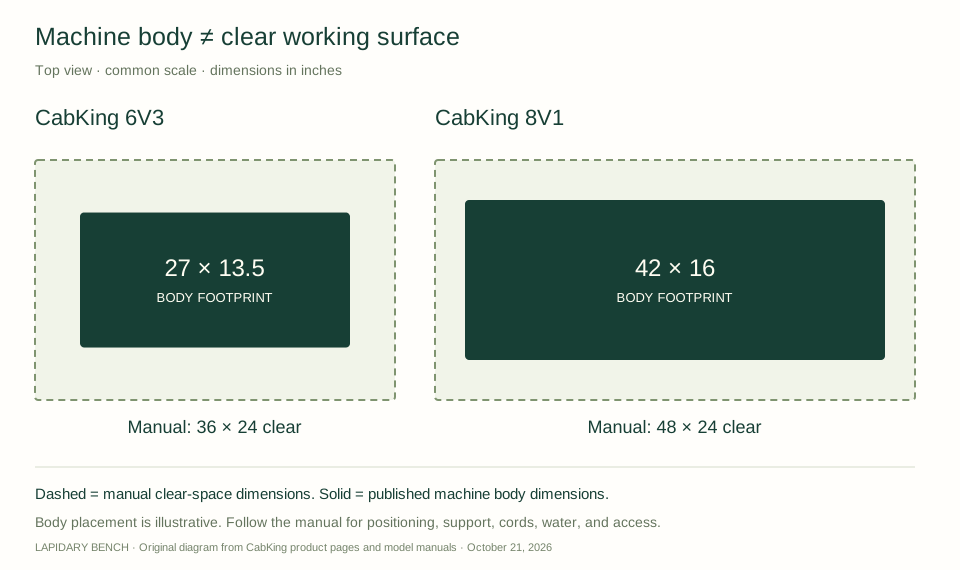
The 8V1 manual also calls for clearance behind the machine for cords and water tubing. Plan collection containers, operator position, and access to the ends of the shafts. A table that merely matches the listed body dimensions is not the same thing as the clear working surface in the instructions.
What the larger size changes on paper
The manufacturer describes the 8-inch model as providing wider wheels and more spacing for larger stones. Treat that as a design description rather than a promise that a particular rough piece will be practical to hold. Compare the dimensions of a representative preform with the actual working area, and ask the manufacturer about unusually large work.
The 3/4 hp rating is three times the 1/4 hp rating. It is not evidence that the larger machine cuts three times faster, makes three times as many cabochons, or lasts longer. We have not measured those outcomes.
Check the finishing kit and shaft arrangement
Both current product listings include two electroplated grinding stages, four resin-wheel stages, a full-face diamond lap, and a polishing pad with compound. The full-face lap is on different ends of the two machines, so check the manual before assuming the same workspace or attachment arrangement.
The 8-inch machine’s listed polishing pad is 6 inches; not every accessory scales to the main wheel diameter. The water-pump foot switch is specifically tied to the 110 V package. For replacement shopping, use the exact part specifications rather than “8-inch machine” as the only filter.
Which setup would we shortlist?
Shortlist the 6V3 when a smaller body and lower listed weight are material advantages, and the wheel layout matches the cabochons you intend to make. Do not assume the compact body removes the manual’s workspace requirement.
Shortlist the 8V1 when you can accommodate its larger setup and have a clear reason to want its documented working-area differences. Confirm support, delivery, and assembly arrangements before ordering. Spending more simply to avoid “outgrowing” a machine is not a substitute for identifying the work you expect to do.
Before you order either model
- Match the model revision and voltage to the offer.
- Read the current manual’s support, electrical, and water-system instructions.
- Confirm the exact included kit, warranty route, and seller return terms.
- Plan both the clear working surface and the water containers.
- Price the complete setup, including any genuinely missing accessories.
Our comparison supports a specification-based shortlist. It cannot establish which machine feels more comfortable or produces a better finish in your hands.
Sources & scope
- CabKing 6: current model and included accessories
- CabKing 8: current model and included accessories
- CabKing-6V3 instruction manual
- CabKing-8V1 instruction manual
Manufacturer documentation checked October 21, 2026. Specifications and bundles can change. Our conclusions are research-based judgments; we have not measured performance, noise, finish quality, or long-term durability.
A DETAIL CHANGED?
Help keep this guide accurate.
Send the model number and a link to the current specification.