
Tumbling / Planning guide
Rock Tumbler Capacity: Barrel Ratings and Batch Planning
Read pound ratings correctly and choose barrel or hopper capacity around compatible, manageable batches.
Research-based guide · We have not physically tested these products. How we research
Jump to a section
THE SHORT ANSWER
A tumbler’s pound rating is not a universal weight of bare rocks or a maximum single-stone size. Read how the manufacturer defines its load, the required fill and the limits of each container. Choose capacity around compatible routine batches, not all the rough you own combined.
Record the basis of the advertised number
A listing may describe a nominal comparison rating, a stone load or a complete operating load. Do not assume these mean the same thing. Find the manufacturer’s definition and ask what is included in the weight: stones, media, abrasive, water or the barrel itself.
The Highland Park RT1212 page explicitly calls its load twelve pounds of stone. Diamond Pacific’s rotary guidance treats pound capacities as approximate comparisons and emphasizes volume. Those statements should remain distinct in a comparison table rather than being converted into falsely identical usable loads.
| Field | Record |
|---|---|
| Typical material | Material identity, condition and size mix |
| Routine batch | How much compatible material accumulates together |
| Container | Exact barrel or hopper and internal working arrangement |
| Weight basis | Stone-only, total charge or nominal comparison rating |
| Fill guidance | Manufacturer-specified working fill for the setup |
| Single-piece suitability | Approved dimensions and movement, not pound rating |
| Handling | Loaded container and practical lifting/cleaning arrangements |
Weight and volume answer different questions
Equal weights of different materials need not occupy the same space. Shape and packing also change how a batch occupies a container. A weight measurement therefore cannot independently establish correct fill or movement. Conversely, reaching a visual fill level does not authorize exceeding the specified weight limit.
Keep both records when the instructions require them. Do not force the barrel to a pound target by adding dense material after the approved fill is reached. For operating quantities and levels, use the actual manual rather than the arithmetic examples in a buying article.
Compatible batches determine useful capacity
Separate material that needs a different process instead of counting it as one large batch. Starting condition, intended shape and the approved abrasive sequence all matter. A shelf with sixty pounds of assorted rough does not necessarily create a suitable sixty-pound operating load.
Write down how much compatible material you normally accumulate and how often. A smaller machine filled appropriately can be a better fit than a large unit waiting for suitable additions. Buying unnecessary filler to justify a machine size is a different cost from processing material you actually intended to finish.
One large container versus several smaller ones
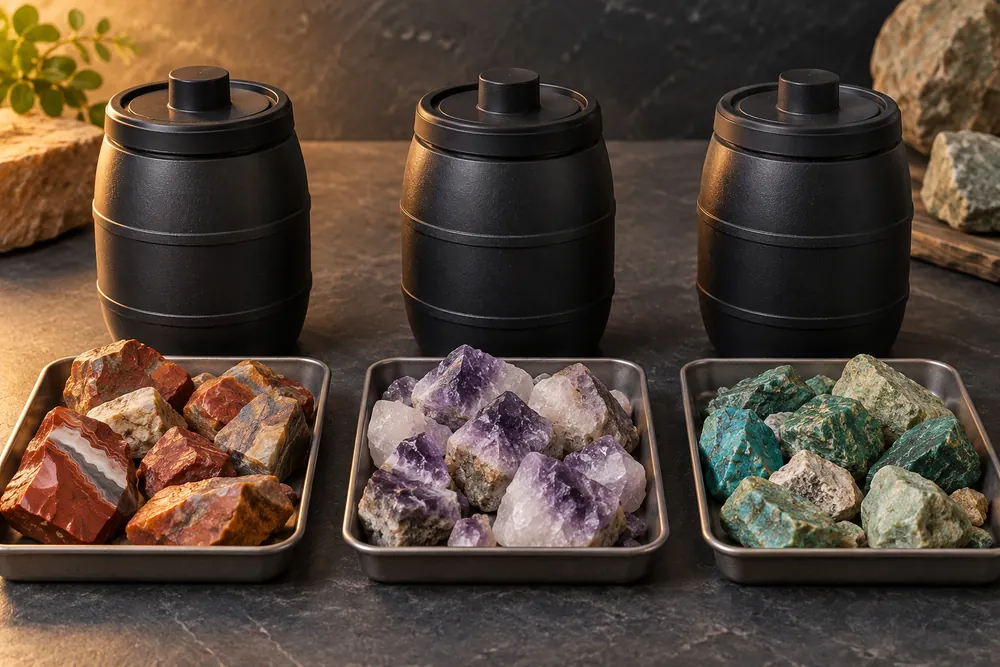
A multi-container configuration can separate batches, but each container remains a distinct working space with its own loading requirements. Total rated capacity does not describe the maximum dimensions of one workpiece. Nor does it establish that every container can be removed or left empty during operation.
Confirm the exact approved container combination. A product photo with multiple barrels may not settle which are supplied with the chosen variant. The workflow comparison gives a hopper example where one larger container and two smaller ones are separate purchase configurations.
Loading affects consumable comparisons
Calculate abrasive charges from the instructions’ actual load basis. Keep stone weight, total charge and container size distinguishable. A kit advertised for “large tumblers” may still contain amounts intended for a specific batch or several smaller charges.
For a hypothetical planning example, three approved five-pound stone batches process fifteen pounds of starting stone. That says nothing about the abrasive dose, finished yield or permission to run all three simultaneously. The grit-cost guide separates those calculations.
Handling can become the limiting factor
Ask how much the loaded container will weigh and how it is removed, inspected and cleaned under the instructions. The machine’s shipping weight is not the same as the operating barrel weight. A purchase may fit the floor plan while creating an impractical handling routine.
Plan stable support, access and suitable help where required. Do not assume a larger motor solves awkward lifting or a poor cleanup route. For heavy equipment, include delivery placement and any required stand or support in the quote before comparing prices.
Choose a size you can explain
Finish the worksheet with one sentence: “I normally have this amount of compatible material, prepared this way, for this approved container and process.” Use that sentence to compare the large rotary options or an appropriate vibratory configuration.
After purchase, record actual loads and outcomes. Those records can show whether more capacity, another container or better sorting would help. An upgrade based on a known bottleneck is more useful than treating the biggest pound number as the best value.
Sources and verification
Sources checked October 22, 2026. Manufacturer specifications and manuals describe the equipment; our selection and planning advice is editorial analysis. We have not physically tested these products. Confirm the exact revision and current instructions before ordering or operating.
A DETAIL CHANGED?
Help keep this guide accurate.
Send the model number and a link to the current specification.