
Tumbling / Buying guide
Best Large Rock Tumblers: 6 Configurations Compared
Compare six larger rotary tumbler configurations by load definition, container construction, handling and complete ownership costs.
Research-based guide · We have not physically tested these products. How we research
Jump to a section
THE SHORT ANSWER
For a first step beyond small hobby barrels, investigate the Highland Park RT1212-110. For a larger single-batch brief, compare the Diamond Pacific 25RT with the Highland Park RT25-110. The Covington 268TUM and larger Diamond Pacific 65T/75RT configurations belong in a heavier-workshop comparison. The right choice is the smallest approved configuration that supports your routine compatible loads.
These are six research-based configuration picks, not measured winners for speed, noise or finished polish. “Large” here starts with a nominal twelve-pound-class machine and extends to commercial equipment. Three selections are related Diamond Pacific models and two are Highland Park models. They offer different capacity choices within families, rather than six entirely independent designs. We have not physically tested them.
Every Amazon button opens a product-name search. We have not confirmed a matching Amazon offer, seller or stock for these specialist machines. Use the linked manufacturer specifications and obtain a complete delivered quote. No current Amazon price or tracked affiliate offer is represented. Read our link disclosure.
| Configuration | Our fit judgment | Documented point | Main decision |
|---|---|---|---|
| Highland Park RT1212-110 | Step up from small hobby barrels | 12 lb of stone stated; variable-speed drive | Does this smaller large-format load meet routine needs? |
| Diamond Pacific 25RT | 25-pound-class comparison with explicit loading guidance | Manufacturer emphasizes volume as well as nominal weight | Confirm the complete barrel, market version and loading instructions |
| Highland Park RT25-110 | Alternative 25-pound-class offer | Named 25 lb / 110V configuration | Obtain exact current specifications and manual |
| Covington 268TUM | Commercial steel-barrel alternative | 40 lb class; rubber-lined hexagonal barrel | Include liner, handling and complete delivery requirements |
| Diamond Pacific 65T | Large-batch workshop candidate | 65-pound-class model in the manufacturer range | Resolve barrel volume, actual charge and handling |
| Diamond Pacific 75RT | Largest named configuration in this shortlist | Distinct current model and market selections | Confirm exact barrel arrangement; do not infer it from the name |
How we selected the six configurations
We started with current manufacturer listings, identifiable model names and equipment intended for rotary tumbling. We compared the capacity class, container construction where documented, electrical options, parts questions and the practical information a buyer needs. We did not award stars, copy customer ratings or turn manufacturer durability language into a tested conclusion.
A place in this shortlist means the configuration is worth investigating for the stated brief. It does not remove unresolved questions. The current Highland Park RT25 category entry identifies the offer, but a buyer should obtain the exact specification and manual before treating it as equivalent to another twenty-five-pound-class machine. Likewise, the 75RT needs an explicit barrel-arrangement confirmation.
We excluded small multi-barrel hobby kits from this large-format comparison. For the more fundamental decision between rounding rough and preserving a prepared shape, start with rotary versus vibratory workflows. A larger rotary purchase will not solve a mismatch between the process and the shape you want.
Smaller step into large-batch planning
Highland Park RT1212-110, 12 lb
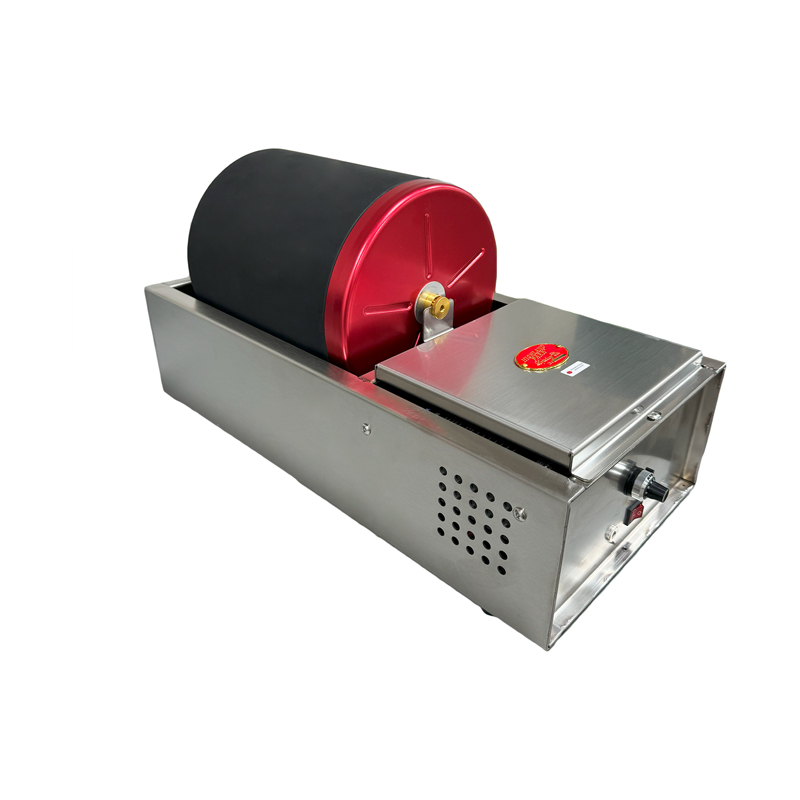
The RT1212-110 is the first configuration to investigate if your normal compatible batch has outgrown a small hobby barrel but does not justify a commercial load. Highland Park explicitly describes its load in pounds of stone. Keep that wording attached to the number instead of comparing it as though every manufacturer uses the same definition.
- Listed model
- RT1212-110
- Manufacturer load wording
- 12 lb of stone
- Drive description
- Variable-speed brushless DC
- Power arrangement
- 110V supply to the specified low-voltage adapter
Its current page describes a direct-drive, variable-speed brushless DC arrangement and a molded rubber barrel. Those are useful design and parts distinctions. They do not establish that it is quieter, cooler or more reliable than the other machines in this guide. We have not measured those outcomes, and we do not repeat a claim that low voltage eliminates every electrical hazard.
The main purchasing question is whether one appropriately prepared twelve-pound-class batch reflects your actual routine. A machine in this class can be a sensible limit if collecting, sorting and cleaning a much larger load would become the difficult part. Ask about approved fill, size mix and operating instructions before turning the stated stone load into a recipe.
Check the exact supplied adapter, barrel assembly and current replacement references. A similar model name or a product photo from a different generation should not substitute for that record. Include a spare-container quote only if it solves a defined stage-separation or replacement need; buying every optional accessory is not necessary to make the initial decision.
Reasons to consider it
The manufacturer states a stone-load basis and identifies the drive arrangement, giving a buyer concrete fields to verify. It provides a smaller comparison point than the commercial models.
Tradeoffs to weigh
It does not offer the nominal capacity of the twenty-five-pound and larger configurations. Factory speed control also does not mean every speed is appropriate for every material or load.
Before ordering: Confirm RT1212-110, the complete power supply, barrel and lid, applicable manual, permitted loading and regional service.
Amazon button opens a product-name search, not a verified matching offer. Check the item, seller and availability. No tracked affiliate offer is represented. About our shopping links.
Twenty-five-pound-class system with stated load guidance
Diamond Pacific 25RT
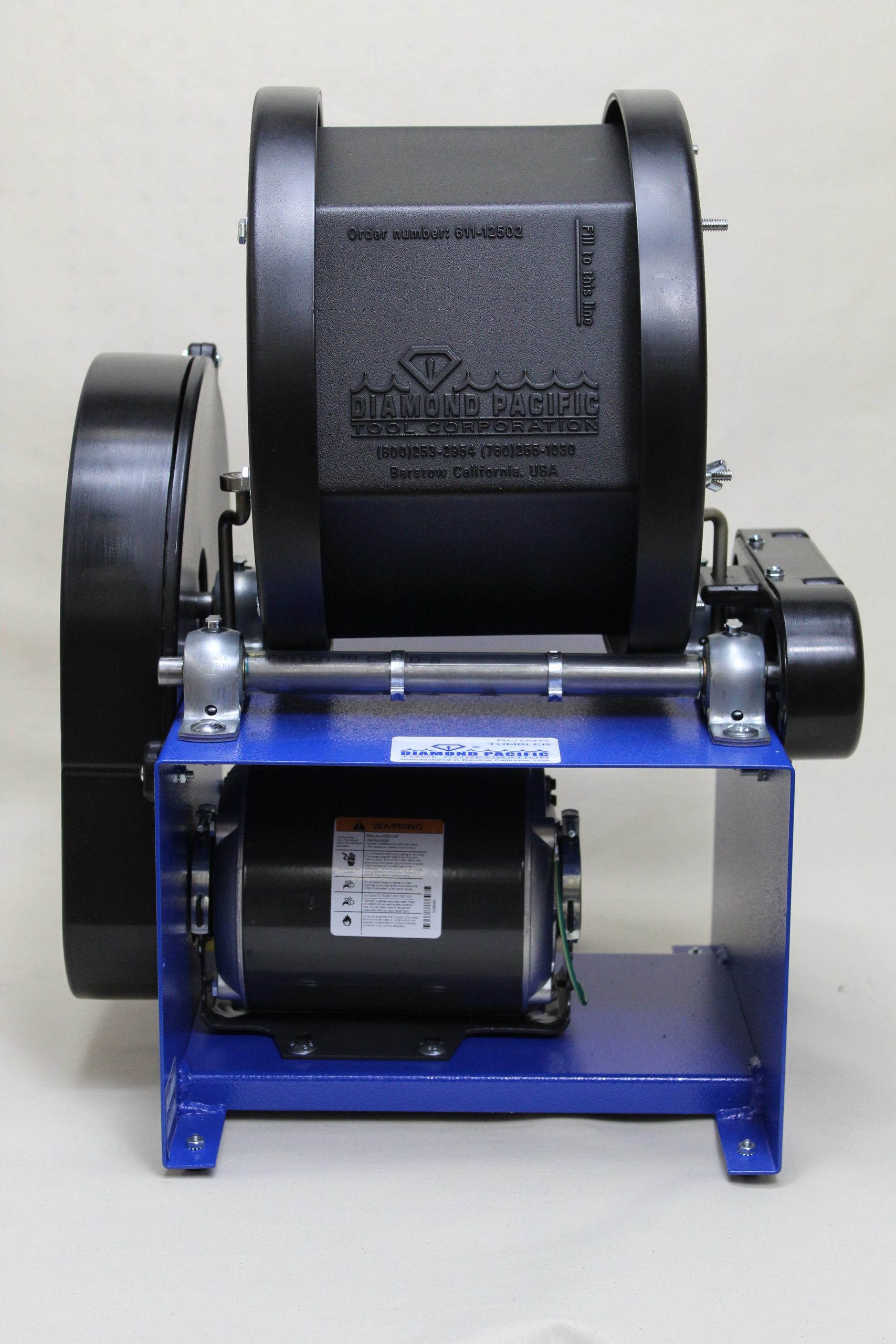
The 25RT is a useful candidate when a defined batch is larger than the RT1212 brief and you want the manufacturer’s loading explanation available before purchase. Diamond Pacific explicitly treats pound ratings as approximate comparisons and emphasizes barrel volume. That limitation should be preserved, not converted into a guarantee that twenty-five pounds of any rough can be run.
- Model
- 25RT
- Nominal class
- 25 lb
- Barrel description
- Polyethylene; manufacturer describes a gasketed lid
- Market options
- 115V/60Hz and 220V/50Hz listed
The current page describes the barrel and market versions alongside the machine. Ask for the exact complete package, applicable instructions and usable barrel information in the quote. This makes the comparison more informative than a retailer title that supplies a pound number but omits how the working charge is defined.
Think about the time needed to accumulate suitable material. A larger container can be useful for a coherent batch; it can also encourage mixing pieces that require different treatment just to reach a target. Keep selection and sorting ahead of the machine size. If several distinct small batches are the norm, compare approved separate-container configurations rather than forcing them together.
For ownership costs, obtain current prices for the exact gasket, drive parts and barrel assembly. This is a parts-planning exercise, not evidence that those parts fail at a particular interval. Avoid a projected annual maintenance bill until you have real use records or a documented service requirement.
Reasons to consider it
The current manufacturer page offers both an identifiable model and explicit cautions about reading weight ratings. Its published market choices support a more specific import inquiry.
Tradeoffs to weigh
The nominal number remains an approximation, and handling and cleaning a larger loaded container are part of the purchase. No comparative finish-time advantage has been established.
Before ordering: Confirm the full 25RT package, selected voltage/frequency, approved load and fill, container dimensions, delivery and parts references.
Amazon button opens a product-name search, not a verified matching offer. Check the item, seller and availability. No tracked affiliate offer is represented. About our shopping links.
Alternative offer in the same nominal capacity class
Highland Park RT25-110, 25 lb
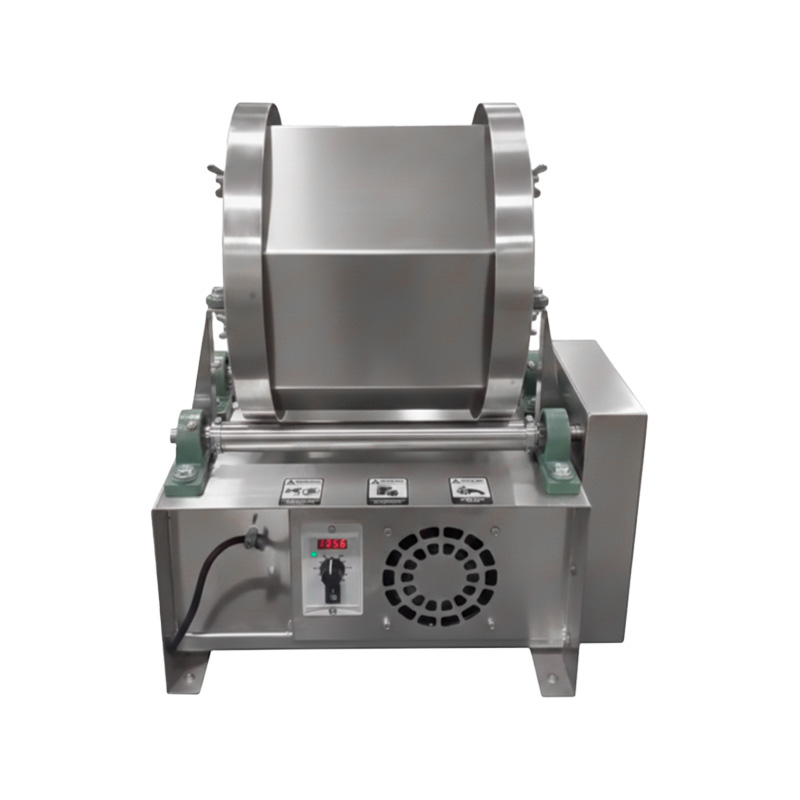
The Highland Park RT25-110 deserves a separate line from the Diamond Pacific 25RT because it is a different named offer with its own package and support. A similar capacity label is not proof that the two machines share the same motor, barrel, drive parts or loading definition. Compare complete documented configurations rather than treating the brand change as cosmetic.
- Listed configuration
- RT25-110
- Advertised class
- 25 lb rotary
- Market identification
- 110V in the model entry
- Evidence boundary
- Current manufacturer category listing and photograph
The manufacturer’s current rotary category identifies the twenty-five-pound model and links its product page. That establishes the model to ask about. We could not extract a complete stable specification from the unusually large product response during this review, so we do not fill the gaps with another model’s motor rating or an unsourced noise figure.
Before shortlisting it on value, ask for the manual, exact drive specification, barrel construction, load basis and complete included-items list. This is a material purchasing condition. If the seller cannot provide those details, it is reasonable to keep the option unresolved and compare a better-documented package instead.
Its role in the guide is to make a relevant alternative visible, not to manufacture a winner from missing data. A useful quote may still show that its container, parts route or delivered total suits your workshop. Keep those written answers beside the Diamond Pacific quote so the final decision rests on equivalent operating baskets.
Reasons to consider it
It is an identifiable manufacturer-listed alternative to investigate at the twenty-five-pound class. Comparing another supplier can reveal practical differences in delivery and service.
Tradeoffs to weigh
The current category entry alone is insufficient for a full technical comparison. No speed, sound, load-definition or durability equivalence is assumed.
Before ordering: Obtain RT25-110 nameplate details, full specifications, manual, exact barrel arrangement, load definition, included components and delivered charges.
Amazon button opens a product-name search, not a verified matching offer. Check the item, seller and availability. No tracked affiliate offer is represented. About our shopping links.
Commercial steel-barrel and liner configuration
Covington 268TUM 40 lb Production Tumbler
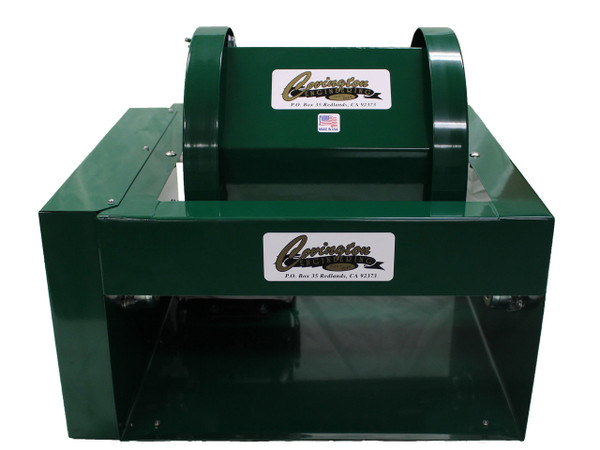
Covington’s 268TUM gives this shortlist a different documented barrel approach. The current page describes a rubber-lined hexagonal barrel and a commercial machine intended for extended heavy use. That identifies construction to compare; it does not establish a measured service life or a faster finish than a polymer-barrel machine.
- Model
- 268TUM
- Nominal class
- 40 lb
- Barrel
- Rubber-lined hexagonal steel construction
- Motor / support
- 1/3 hp listed; enclosed roller-frame arrangement
Include the liner and gasket in the long-term parts record. A buyer comparing complete replacement barrels should distinguish a lined steel assembly from a linerless barrel design, because the components and future purchasing questions differ. Do not assume a nominally similar drum from another machine is a suitable substitute.
The current manufacturer page lists a machine weight, but ask whether the figure describes the supplied unit or shipment before planning placement. The operating container adds another handling question. Confirm the practical routine for loading, removal, inspection and cleaning under the current instructions rather than judging only the machine’s footprint.
The linked rotary instruction document carries an older date and covers several Covington designs. Read it for the named machine, then have the seller confirm the current revision and any changes. A historic multi-model instruction sheet should not override a current nameplate or silently transfer a different model’s motor, barrel or service specification.
Reasons to consider it
The maker identifies the model, motor class and barrel construction, and lists supporting instructions and replacement components. It offers a distinct construction comparison.
Tradeoffs to weigh
The heavier commercial format requires delivery, support and handling planning. A liner is a component to identify and maintain, not an unqualified advantage or disadvantage.
Before ordering: Confirm 268TUM, current manual, included barrel and liner, electrical version, actual weights, delivery placement and replacement-part availability.
Amazon button opens a product-name search, not a verified matching offer. Check the item, seller and availability. No tracked affiliate offer is represented. About our shopping links.
Larger single-batch workshop candidate
Diamond Pacific 65T
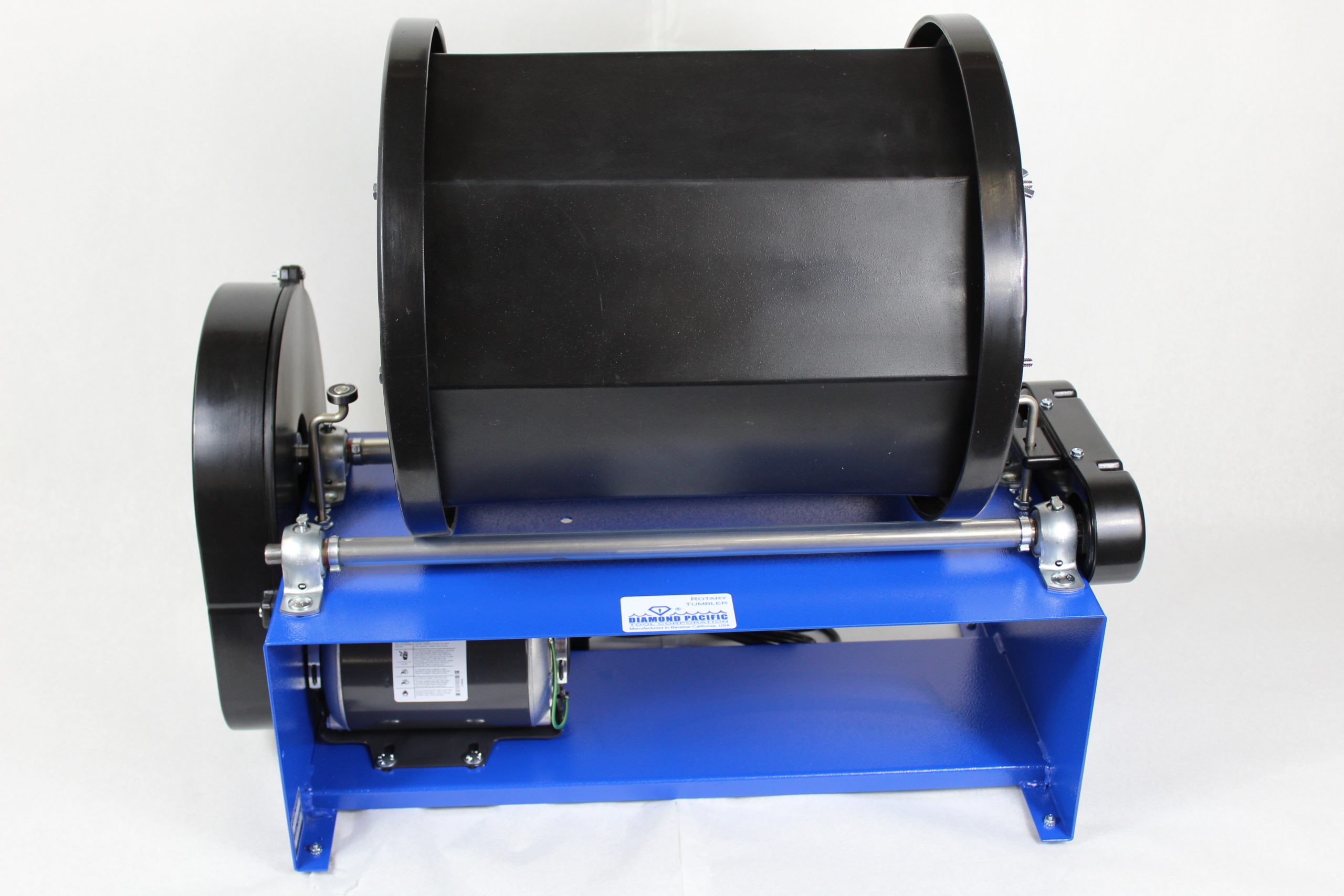
The 65T belongs in a comparison only when you can explain the larger compatible batch and handling plan. More capacity is useful when it addresses an actual queue of suitable material. It is not automatically useful for someone with a large mixed collection that should be separated into different processes.
- Model
- 65T
- Nominal class
- 65 lb
- Published range
- Larger Diamond Pacific rotary equipment
- Purchase route
- Manufacturer asks buyers to discuss shipping arrangements
The current manufacturer page asks buyers to discuss purchase and shipping because online ordering and displayed stock do not settle the delivery arrangements. Treat that as a concrete next step before budgeting or representing an item as immediately available. An Amazon search result, if one appears, still needs an exact model and seller check.
Ask for barrel volume, the definition of the load rating and the actual complete charge permitted by the instructions. Confirm machine and loaded-container handling separately. Do not turn the sixty-five-pound model name into a maximum stone size, bare-rock weight promise or lifting specification.
A larger batch also concentrates more material in one process. Consider how you will identify, inspect and record it, and what happens if some stones need another stage while others are ready. The question is whether this configuration fits your operation, not whether it creates the biggest number in a comparison table.
Reasons to consider it
It provides a documented larger-capacity candidate within the same manufacturer family, useful when a smaller machine would be a genuine bottleneck.
Tradeoffs to weigh
Shipping, actual load definition and container handling need confirmation. No proportional increase in finished output or reduction in cost per stone is assumed.
Before ordering: Obtain a written configuration and freight quote, exact barrel information, instructions, market version and handling requirements before purchase.
Amazon button opens a product-name search, not a verified matching offer. Check the item, seller and availability. No tracked affiliate offer is represented. About our shopping links.
Largest named configuration in this comparison
Diamond Pacific 75RT
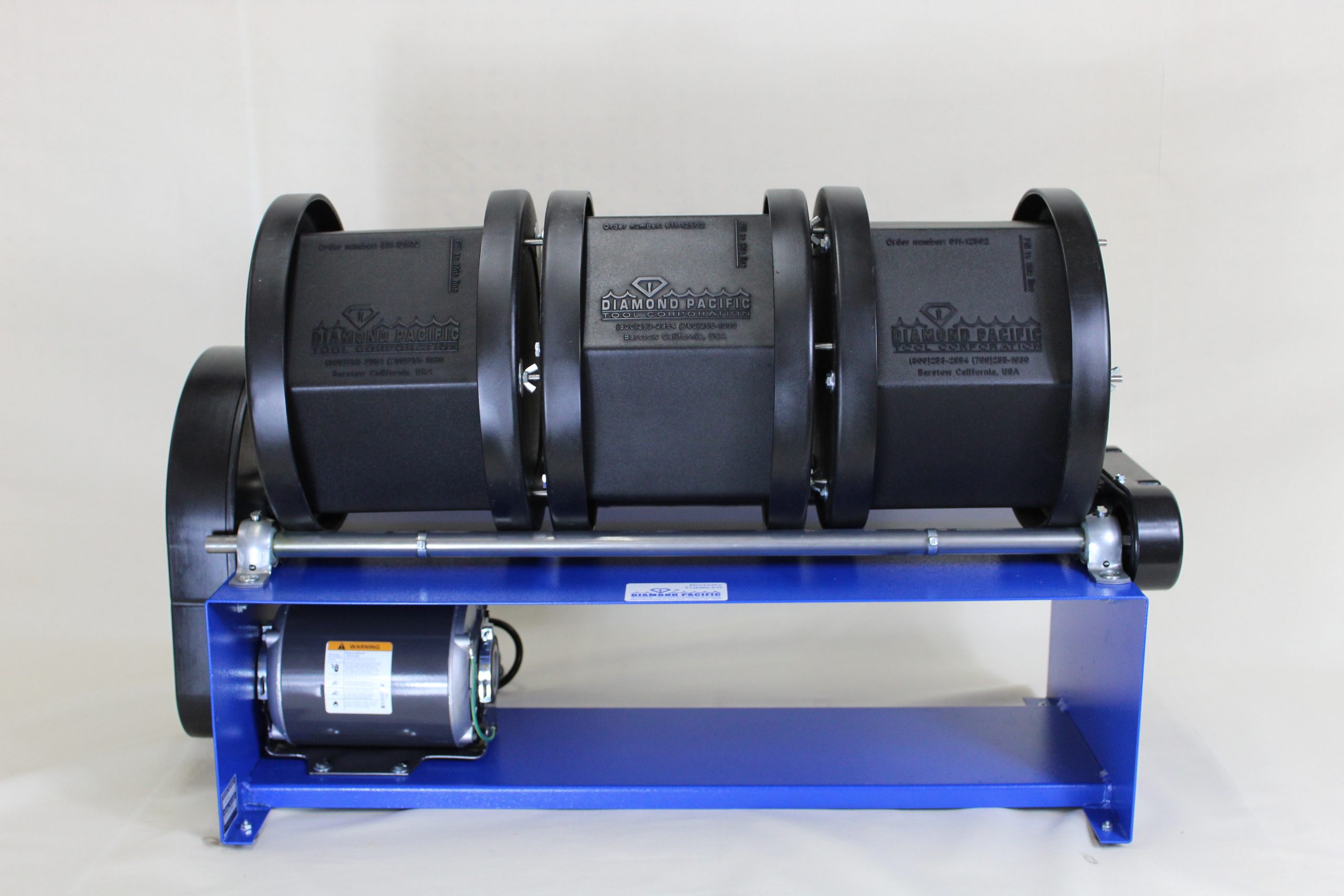
The 75RT is a separate named configuration, not a claim that one enormous seventy-five-pound stone belongs in a barrel. Its current manufacturer listing uses shared family descriptions, so the actual container arrangement and loading instructions must be confirmed. We do not infer usable internal dimensions or per-barrel capacity from the model number.
- Model
- 75RT
- Nominal identification
- 75-pound-class model
- Relationship
- Related Diamond Pacific rotary family
- Critical question
- Exact supplied barrel arrangement and load per container
If the quoted configuration uses several containers, discuss how each must be loaded and whether the arrangement can separate your intended batches. If it uses another arrangement, record that explicitly. A seller’s photo and a summed capacity label are not enough to establish which containers are included or which combinations are approved.
This option is most relevant to a workshop that already understands its batch flow and needs to compare a larger system against multiple smaller machines. Include shared-drive implications, parts access and service in that discussion. A single purchase can simplify some arrangements while limiting others; the correct answer depends on the documented configuration.
For a first tumbler, this class is difficult to justify without a clear supply of compatible material and an appropriate installation. Start with the batch worksheet before considering the machine-only price. A larger total rating is not evidence that the equipment is more economical when it is regularly underfilled or creates awkward handling.
Reasons to consider it
It makes a current larger named model available for a structured workshop quote. The related-family comparison can help a buyer discuss expansion with one supplier.
Tradeoffs to weigh
Shared generic page copy leaves important arrangement questions open. Do not order on the model number alone or treat the rating as one workpiece’s capacity.
Before ordering: Require the exact supplied containers, load per container, approved combinations, dimensions, market version, parts list and delivered total in writing.
Amazon button opens a product-name search, not a verified matching offer. Check the item, seller and availability. No tracked affiliate offer is represented. About our shopping links.
Choose the load before the nominal pound rating
Make three lists: material that can run together under the intended process, material that needs a different process, and material that is not yet identified or prepared. Only the first list supports an immediate capacity decision. Counting all three together can make a much larger machine appear necessary when the real task is sorting.
For each proposed batch, record the material, size range, starting condition and desired result. Then match it to the maker’s approved fill and load definition. Our capacity worksheet explains why stone-only weight, total charge and approximate comparison ratings should remain distinct.
Do not choose the machine around a single unusually large rock unless the maker confirms that the actual piece can move and be processed within the approved arrangement. A pound rating is not a dimensional limit. Preparation or a specialist service may be more practical for that exceptional piece.
Compare running costs with explicit assumptions
Machine price is only one line. Add the delivered charges, suitable support, starting abrasive stages, approved media, waste handling and any necessary electrical assessment. Separate required items from optional spare containers and future upgrades. An incomplete low quote should not be compared with a complete operating package.
For energy, use an identified average-power assumption or an appropriately obtained measurement, the planned hours and the local tariff. As a hypothetical arithmetic example, 0.15kW for 120 hours is 18kWh. At an assumed $0.20 per kWh, that is $3.60. These figures describe no named machine and are not a forecast of cycle length.
Consumable spending needs the actual approved charge and repeated stages. The grit guide shows how to calculate cost per charge without pretending that it equals cost per finished stone. Yield, sorting, damaged material and your time remain separate records.
Parts, workspace and support can decide a close comparison
Ask for the current manual and exact references for barrels, lids, gaskets, liners where applicable, drive components and supplied electrical parts. Confirm which are available in your region and who checks fit. A verbal claim that ordinary replacement parts are easy to obtain is weaker than an identified order reference.
Measure the working installation and the route for moving a loaded container. Include cleanup and inspection access. Published body or shipping dimensions alone do not establish adequate space. Follow the machine’s supervision and operating-location requirements; we do not assume every rotary tumbler may be left running unattended.
For imports, verify voltage and frequency on the exact order, along with powered accessories. Use the electrical-market checklist. A travel adapter or a photo of another market’s plug cannot settle suitability.
Questions before buying a large rock tumbler
Is a bigger tumbler always faster? No such result is established here. Capacity and cycle time are different fields. Compare the actual material, starting condition, approved process and definition of completion before making a throughput claim.
Can two small containers replace one large barrel? They can provide separate batch spaces when the system permits them. They do not create one larger internal chamber. Confirm the approved combinations and individual loads with the manufacturer.
Does a variable-speed drive guarantee better results? No. It identifies a control feature. The permitted setting and process still need to match the machine, material and load, and we have not measured a comparative finish benefit.
Are these all verified Amazon offers? No. The shopping buttons are clearly labeled product-name searches. Check matching model, package, seller, delivery and returns yourself, or obtain a manufacturer quote. A search button is not evidence of stock.
Which configuration should a new buyer investigate first? Begin with the smallest one that supports the documented routine batch. The RT1212-110 is the smaller starting point in this shortlist, while twenty-five-pound-class options are the next comparison when actual load records justify them. Larger systems need a specific workshop brief.
Sources and verification
Sources checked October 22, 2026. Manufacturer specifications and manuals describe the equipment; our selection and planning advice is editorial analysis. We have not physically tested these products. Confirm the exact revision and current instructions before ordering or operating.
A DETAIL CHANGED?
Help keep this guide accurate.
Send the model number and a link to the current specification.