
Accessories / Buying guide
Best Gemstone Polishing Compounds: 6 Products Compared
Compare diamond paste, loose diamond, cerium, tin oxide and alumina products by form, grade, package and supported use.
Research-based guide · We have not physically tested these products. How we research
Jump to a section
THE SHORT ANSWER
Start with the compound and pad system recommended for your material and equipment. Hi-Tech’s diamond paste is a pre-carried syringe option; its loose diamond powder is a separate-carrier choice. The two cerium products offer different packaging, while Covington’s tin oxide and Linde A provide alternative oxide products to investigate with material-specific guidance. None is a universal polish for every gemstone.
The best gemstone polishing compound is a complete match between material, prepared surface, abrasive grade, carrier and polishing support. A container labeled polish does not establish all five. This guide compares six actual products and shows the information needed before buying, without claiming a finish, speed or lifespan we have measured.
The six choices include related chemistries deliberately. Diamond paste and diamond powder differ in supplied form; the two cerium products differ in packaging and documented buying options. They are not presented as six unrelated chemical solutions. “Best fit” below means a specific purchasing need to investigate, not a laboratory result or a guarantee that a difficult stone will take a mirror finish.
| Product | Buying need to investigate | Supplied form | Check that matters |
|---|---|---|---|
| Hi-Tech Diamond Paste | A pre-carried compound for a supported pad workflow | Oil-carried diamond in syringes | Exact grade, mass and carrier compatibility |
| Hi-Tech Diamond Powder | A specified process needing loose diamond | Dry diamond in carat-labeled vials | Grade, actual mass and approved carrier |
| Hi-Tech Cerium Oxide Powder | A bottle intended for preparation under its directions | Oxide powder in a mixing bottle | Bottle volume is not necessarily powder mass |
| Diamond Pacific Super Cerium Oxide | A separately measured cerium-oxide supply | Oxide compound in quantity options | Selected quantity and matching support |
| Covington Tin Oxide | An alternative oxide for an identified material | Tin-oxide powder | Material and pad guidance before substituting |
| Covington Linde A Polish | A specifically graded alumina option | Aluminum-oxide powder | Published particle grade and intended process |
Amazon buttons open name-specific searches, not verified product offers. These specialist compounds may be available mainly from the manufacturer or a specialist dealer. Match the exact product, grade and quantity before comparing a marketplace listing. Read our shopping-link disclosure.
A pre-carried diamond syringe option
Hi-Tech Diamond Paste
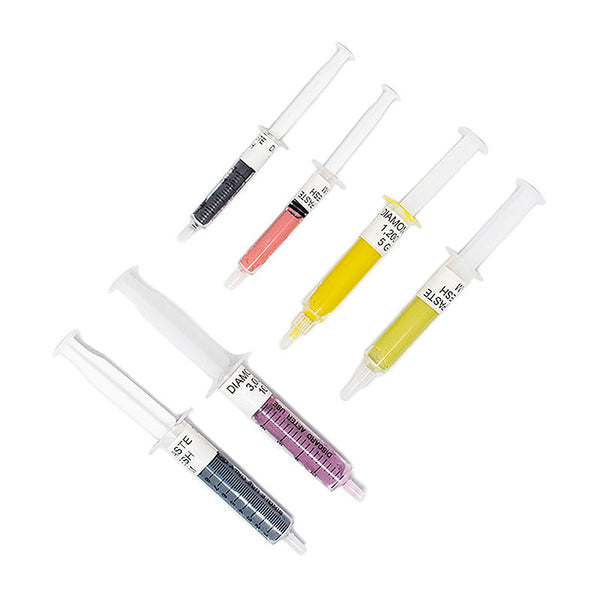
Compare this product when your approved finishing process uses diamond on a suitable charged pad and you prefer a supplied carrier. Hi-Tech identifies an oil-based carrier and several syringe masses. Select the exact grade and amount; a photograph showing several colors does not establish that a complete grade set is included.
- Abrasive
- Diamond
- Carrier
- Oil-based, per manufacturer
- Package choices
- 2, 5 or 10 gram syringes
- Grade selection
- Multiple separately selected grits
A syringe containing paste is not directly comparable with the same mass of dry diamond. The paste includes its carrier, and the listing’s concentration description is not a measured figure we can convert into diamond mass. Compare equivalent supplied products or request concentration information before making a price-per-diamond calculation.
The carrier belongs in the compatibility check alongside the abrasive. Ask whether it suits the pad, material and machine process you intend to follow. Do not assume that any polishing pad accepts every oil-based compound or that a material described broadly as a gemstone requires the same grade. Keep the specific syringe associated with its labeled stage.
This is a convenience and identification choice, not a tested speed award. For an existing kit, first check whether its included paste already supplies the stage you need. Replacing a missing syringe is a different purchase from adding a new chemical or rebuilding the entire finishing sequence.
Reasons to compare
- Supplied carrier and identified syringe masses
- Individual grade selection for an existing workflow
Tradeoffs to check
- Paste mass includes carrier
- A family photo is not a full-set promise
Before ordering: Confirm the exact grit, syringe mass, supplied quantity and pad/carrier approval.
Amazon button opens a product-name search, not a verified matching offer. Check the item, seller and availability. No tracked affiliate offer is represented. About our shopping links.
Loose diamond for an already specified process
Hi-Tech Diamond Powder
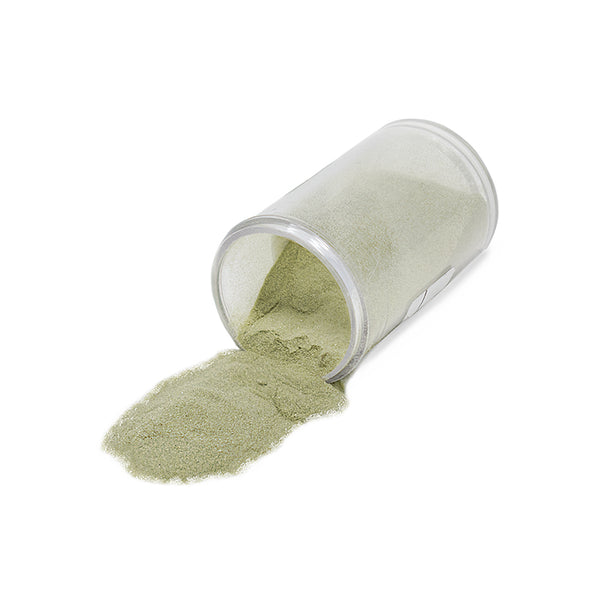
Loose diamond powder belongs on a shortlist where the intended process already specifies diamond, an appropriate grade and a compatible carrier. It is not the simpler equivalent of a ready-carried syringe. The purchase includes another formulation and handling decision rather than removing one.
- Abrasive
- Diamond
- Supplied form
- Dry powder
- Package labeling
- 25- or 50-carat vials
- Additional decision
- Appropriate carrier and support
Hi-Tech labels these vials by carat. A metric carat is 0.2 grams, so 25 carats equals five grams and 50 equals ten grams. These are unit conversions, not measurements of the contents we received. Compare the selected vial label and supplied quantity rather than mistake 25 carats for 25 grams.
The manufacturer lists possible carriers, but that list does not establish compatibility with every machine, pad or material. Obtain a recommendation for your specific system and follow its product directions. This guide does not supply a universal mixing recipe or suggest household substitutions to alter an established finishing process.
For a buyer already using an appropriate loose-diamond system, the ability to purchase the specified grade can be useful. For a beginner without a defined pad and carrier, a maker-supported complete polishing provision is a clearer starting point. A low price per gram does not include the work or additional components required to make the chosen process usable.
Reasons to compare
- Identified dry-abrasive form
- Carat-labeled quantities can be converted clearly
Tradeoffs to check
- Carrier and application system remain separate
- Not equivalent to paste mass
Before ordering: Select the exact grade and carat quantity, and confirm the complete carrier-and-pad process.
Amazon button opens a product-name search, not a verified matching offer. Check the item, seller and availability. No tracked affiliate offer is represented. About our shopping links.
A cerium bottle with its own preparation directions
Hi-Tech Diamond Cerium Oxide Powder
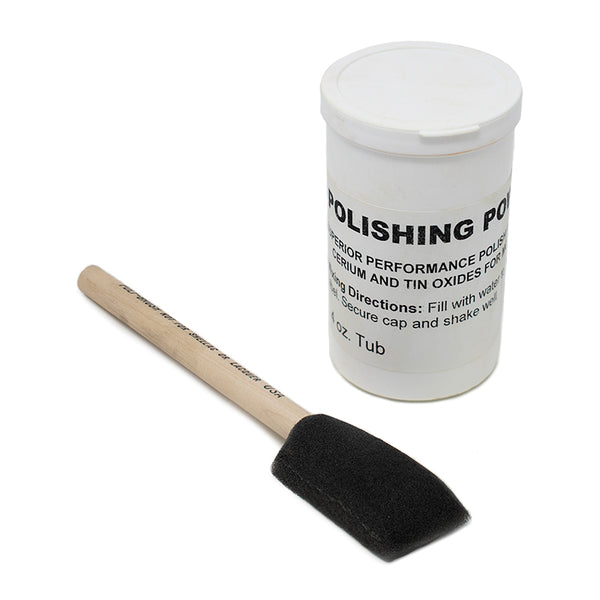
This option is relevant when a manufacturer-supported process calls for cerium oxide and the bottle format suits how you intend to prepare and store it. The listing describes a ready-to-mix bottle and an included foam brush. Follow the directions on the actual supplied container; packaging may change.
- Compound
- Cerium oxide
- Manufacturer description
- Optical grade
- Package description
- 4 fluid ounce / 118 ml bottle
- Included application item
- Foam sponge brush, per current listing
The published bottle capacity is a volume, not an established net mass of oxide powder. Do not compare its four-ounce bottle headline with a competitor’s four-ounce weight as if both contain the same amount of abrasive. Ask for net contents where quantity determines the buying decision.
The maker describes its powder as optical grade, but the grade name alone does not give us a comparable particle-size distribution against every other product here. We have not measured its grain size, scratch behavior or resulting finish. Do not repeat a relative fineness claim as an independent test.
Choose this product for an identified cerium workflow and useful packaging, not as a guaranteed correction for an unfinished surface. If the stone still carries coarse marks, establish which stage left them before purchasing more final polish. The brush included in a package also does not replace every pad or support specified for a machine.
Reasons to compare
- Bottle preparation is described by the maker
- Included applicator is explicitly listed
Tradeoffs to check
- Bottle volume does not establish powder weight
- Optical grade is not our comparative test result
Before ordering: Confirm the actual net contents, directions, pad system and current packaging.
Amazon button opens a product-name search, not a verified matching offer. Check the item, seller and availability. No tracked affiliate offer is represented. About our shopping links.
A cerium supply with separately selected quantities
Diamond Pacific Super Cerium Oxide
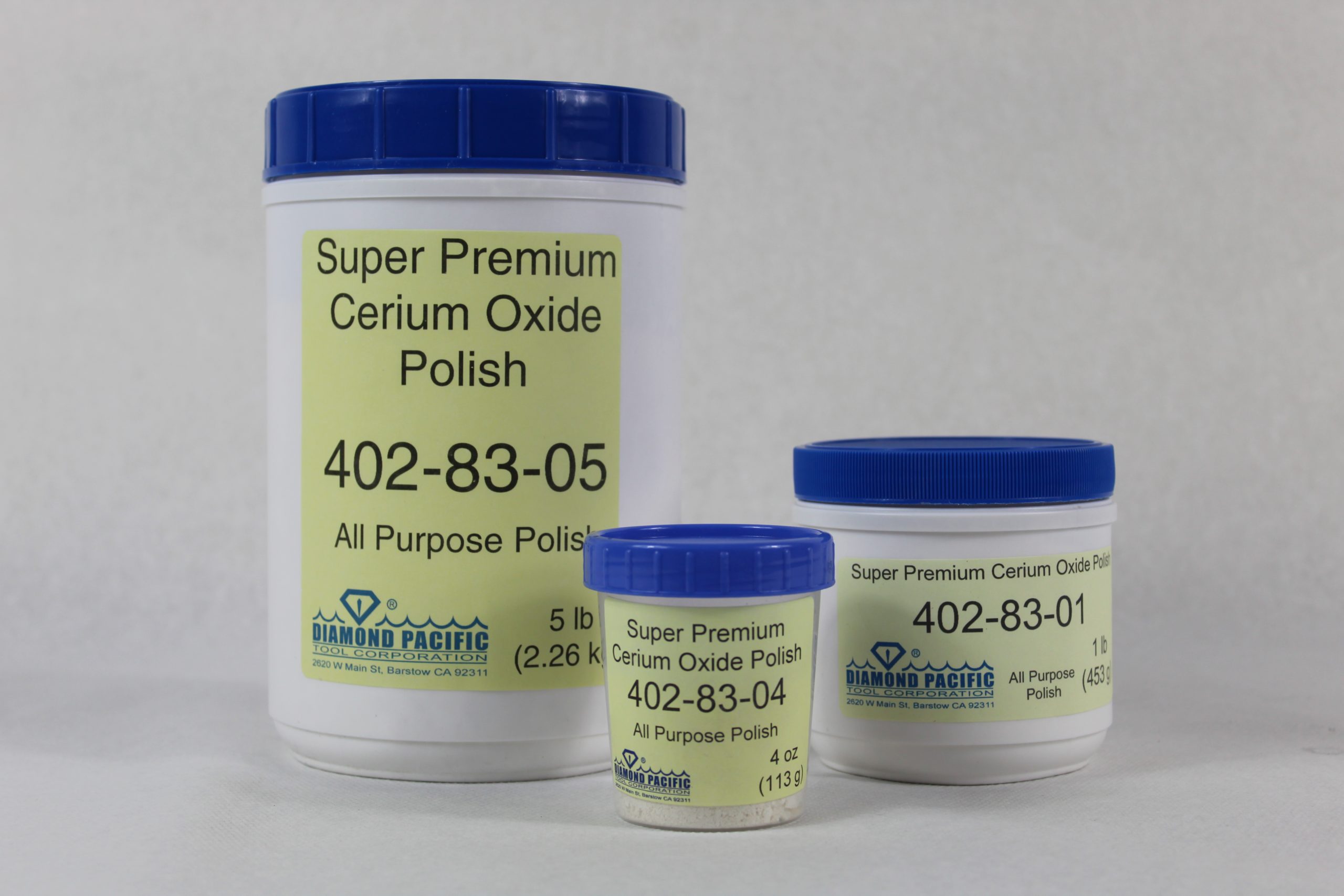
Diamond Pacific’s Super Cerium Oxide is the second cerium product in this guide, included for buyers comparing a separately quantified supply rather than the mixing-bottle format above. Select the actual package; the starting price or product photo does not establish which quantity is in the cart.
- Compound
- Cerium oxide
- Grade description
- Optical grade, per manufacturer
- Listed quantities
- 4 oz, 1 lb or 5 lb
- Support reference
- Maker discusses felt-pad use
The maker discusses felt-pad use and a broad range of stone applications. Those are product recommendations from the supplier, not evidence that we achieved that finish or compared it with another oxide. Confirm the material and support in your intended process before substituting it for a kit’s supplied compound.
The listing also notes that the compound’s color may vary. Color is therefore a poor basis for declaring a received package a different chemistry or judging quality by a photograph. Use the label, product identification and supplier confirmation where something appears inconsistent.
Buying a larger quantity can reduce repeated ordering only if the compound is already appropriate and you can store it correctly. We have no measured consumption rate to recommend a bulk package for every home bench. Start with the required workflow and realistic purchase quantity rather than assume that a larger bag is automatically better value.
Reasons to compare
- Several stated quantity options
- Useful second sourcing option for a defined cerium process
Tradeoffs to check
- Same principal chemistry as the other cerium choice
- Broad maker claims are not independent finish evidence
Before ordering: Choose the exact quantity and confirm the pad, material and storage directions.
Amazon button opens a product-name search, not a verified matching offer. Check the item, seller and availability. No tracked affiliate offer is represented. About our shopping links.
An alternative oxide after material-specific advice
Covington Tin Oxide

Covington’s tin oxide is an alternative compound to investigate when the material and finishing instructions call for it. The maker publishes a purity specification and several quantity choices. Those facts identify the order; they do not prove that a stone which resisted cerium will necessarily polish with tin oxide.
- Compound
- Tin oxide
- Published purity
- 99.9%, supplier specification
- Listed packages
- 1 lb or 5 lb
- Use decision
- Appropriate material and support needed
Treat a compound change as a change to a process. Establish whether the surface is ready for polish, the pad is appropriate and earlier abrasive contamination is absent. Otherwise several different final compounds can appear unsuccessful for a reason that the chemistry alone does not address.
The current listing includes a safety-data link. Obtain and follow the supplied handling and storage information along with the intended machine instructions. Do not assume all white powders or all containers labeled polish have the same composition or handling requirements.
Compare the amount you actually need before choosing a package. A bulk quantity is a purchasing commitment, not evidence of a lower cost per finished stone. We have not measured consumption, finish quality or effectiveness on a specific material. Get a supplier recommendation that names your stone and support rather than buy on a universal gemstone claim.
Reasons to compare
- Identifiable tin-oxide alternative
- Purity and package options are published
Tradeoffs to check
- No guarantee of correcting an earlier-stage problem
- Quantity may exceed a beginner’s actual need
Before ordering: Confirm material suitability, pad, net quantity and the current safety-data information.
Amazon button opens a product-name search, not a verified matching offer. Check the item, seller and availability. No tracked affiliate offer is represented. About our shopping links.
A specifically graded alumina product
Covington Linde A Polish
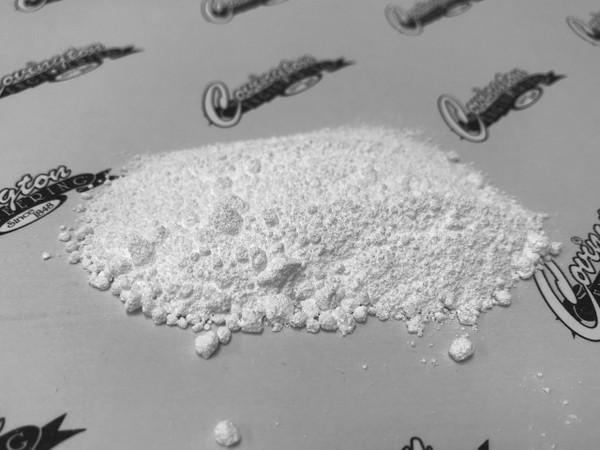
Covington identifies Linde A as an alumina polish with a 0.3-micron grade. This makes it an option to investigate where a specified process calls for that material and particle grade. It should not be treated as interchangeable with every other aluminum-oxide powder or any product labeled final polish.
- Compound
- Aluminum oxide / alumina
- Published particle grade
- 0.3 micron, supplier specification
- Published purity
- 99.98%, supplier specification
- Listed quantities
- 1 oz or 8 oz
A stated micron figure is a useful specification, but it is not a finish-quality score. We have not independently verified the distribution, measured the resulting surface or compared it with the diamond and cerium choices. Ask for the appropriate pad and material guidance before changing an existing process.
The small and larger packages provide a different quantity decision from the pound-scale tin-oxide listing. Compare actual weight units, supplied grade and delivered charges. A smaller container can be a rational purchase when the compound’s suitability is still being established through appropriate instruction.
Do not rank compounds solely by a hardness number or choose this one because its particle-size numeral appears smallest. Abrasive type, surface preparation, support and the material all remain relevant. The documented reason to compare Linde A is its identified chemistry and grade, subject to a complete supported finishing method.
Reasons to compare
- Chemistry and micron grade are identified
- Two stated purchase quantities
Tradeoffs to check
- Micron size does not predict the finished result by itself
- Not a universal substitute for other alumina products
Before ordering: Confirm the exact Linde A product, quantity and material-specific support and process.
Amazon button opens a product-name search, not a verified matching offer. Check the item, seller and availability. No tracked affiliate offer is represented. About our shopping links.
Choose a polishing system before choosing a container
Write down the material, target surface, preceding abrasive stage, polishing support and any manufacturer-recommended compound. A dome and a broad flat face may need different support even when the compound chemistry is the same. Make the order match that complete record.
If a machine kit already contains a pad and compound appropriate to the first project, inspect that provision before adding alternatives. The All-U-Need kit comparison lists the current supplied components. An additional container is useful when it fills a defined gap, not merely because polishing is part of every project.
For unfamiliar materials, obtain suitable instruction and ask the supplier to name the exact compound and support. A broad statement that a product polishes gemstones is not a complete recommendation for your stone. Keep uncertainty visible rather than convert it into an unsupported best-for-everything award.
Understand grit, mesh and micron labels
Read the grade exactly as the product is sold. Different naming and grading systems should not be combined into a precise conversion table unless the manufacturer supplies the correspondence. An approximate internet conversion is not enough to claim that two abrasive products are identical.
A high grit number also does not establish that a compound belongs immediately after the last wheel in every sequence. Construction and support affect the system. Our wheel-stage guide distinguishes a resin wheel from a separate compound-charged pad.
Keep a label with each supply and its intended stage. If the package does not identify grade or composition adequately, request clarification before using it as a finishing reference. A color code from one manufacturer should not be transferred to another brand.
Quantity comparisons: use the same unit and product form
First distinguish dry powder from paste containing a carrier. Then distinguish weight from bottle volume. Only after those fields match should you calculate a simple delivered cost per gram or ounce. Without concentration information, cost per gram of paste is not cost per gram of diamond.
For a hypothetical comparison, $20 for ten grams of the same supplied compound is $2 per gram; $36 for twenty grams is $1.80. These invented inputs show the calculation. They do not compare the actual products above or establish that the larger quantity is appropriate.
Cost per finished stone requires real usage and acceptable-result records. We do not have those measurements. Avoid a cost-per-stone headline built from assumed container life or a manufacturer’s general economy claim. Start with a quantity that fits the identified workflow and storage instructions.
Polish cannot be assumed to remove an earlier-stage problem
Inspect the surface before the polishing stage using a method appropriate to the material and instruction. A final compound should not automatically be expected to remove marks that remain from rough shaping. Buying a finer grade can leave the same unresolved surface visible.
If a problem occurs, record where it first appears. Keep the material, pad and compound identified so the supplier can understand the process. Changing several variables at once can make a result difficult to interpret, even if the final appearance changes.
This is particularly relevant when comparing a supplied diamond paste with an oxide alternative. A different compound and a different pad may create a different system. Do not credit or blame the chemical alone without establishing the condition of the preceding surface.
Keep polishing supports and supplies identifiable
Follow the product and equipment directions for suitable pads, cleaning and storage. Separate coarse abrasives from finishing supplies and keep the relevant grade or compound identified with its support. A contaminated pad can make a later-stage mark look like a compound-selection failure.
Do not use one product’s preparation or cleaning instructions for every other chemistry and carrier. The presence of a sponge in a bottle package does not establish the correct support for a motorized machine, and a pad advertised for several compounds may still require appropriate preparation.
Consult the relevant safety data and directions for the actual supplied product. This guide does not prescribe powder-handling equipment, universal mixing proportions or household carrier recipes. Obtain clarification where the container and machine instructions leave a compatibility gap.
How we made these recommendations
We selected identifiable products with accessible manufacturer descriptions and useful differences in form, grade or package. We did not give stars, measure polishing speed, estimate abrasive lifespan or claim firsthand results. Supplier statements about purity and particle grade remain supplier specifications.
The recommendations are therefore narrow: a pre-carried syringe, a loose-diamond product, two differently packaged cerium choices, and two alternative oxide products. Related chemistry is disclosed rather than counted as independent evidence that one maker outperforms another.
No compound was selected because of an assumed Amazon listing or commission rate. Marketplace buttons remain labeled searches. Check the exact product and seller, and use the manufacturer or a reputable specialist where the required item cannot be verified elsewhere.
Frequently asked questions
Is cerium oxide the best polish for every stone?
No universal claim is supported here. It is a product family to investigate where the material and support guidance recommend it. Final results depend on more than chemistry.
Is diamond paste easier than powder?
Paste supplies a carrier, which removes one formulation decision. That does not establish that the carrier suits your pad or material. Powder requires a defined compatible preparation process.
Does a four-ounce bottle contain four ounces of powder?
Not necessarily. Bottle capacity can be volume while the contents have a separate weight. Check net contents before comparing the price with a weight-labeled package.
Can I use a compound from this guide in a rock tumbler?
Do not assume a pad-polishing recommendation transfers to a tumbler. Confirm that equipment’s permitted abrasive and process with its manufacturer. This guide focuses on selecting compounds for identified lapidary finishing systems.
What should I buy first?
For batch tumbling, distinguish grinding grit, final polish and filler media before transferring a wheel or pad recommendation to a barrel process. First inventory the pad and compound supplied with your chosen system. Then buy a missing or recommended stage in the exact grade and quantity, rather than a collection of unrelated final polishes.
Sources and verification
Sources checked October 22, 2026. Manufacturer specifications and manuals describe the equipment; our selection and planning advice is editorial analysis. We have not physically tested these products. Confirm the exact revision and current instructions before ordering or operating.
A DETAIL CHANGED?
Help keep this guide accurate.
Send the model number and a link to the current specification.