
Flat laps / Accessory guide
Flat Lap Backing Plates and Polishing Pads: What Fits Together?
Understand plate, pad and cushion roles, then order compatible assemblies without duplicating kit components.
Research-based guide · We have not physically tested these products. How we research
Jump to a section
THE SHORT ANSWER
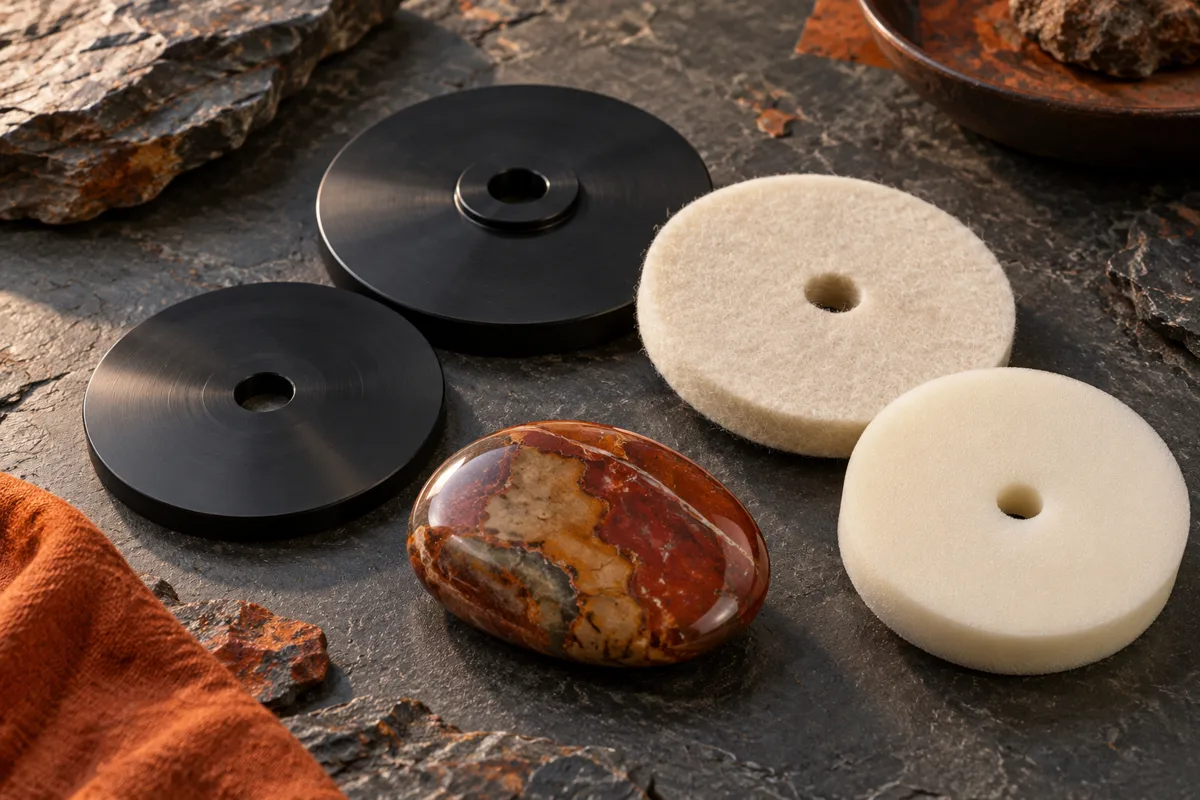
A backing plate supports the working disc; a polishing pad carries a chosen polishing compound; an optional cushion changes compliance where the manufacturer approves it. Order these as a compatible assembly. A matching diameter alone does not establish the correct bore, mounting, thickness or working surface.
| Component | Job | Before ordering |
|---|---|---|
| Backing plate | Provides the supporting surface and machine interface | Diameter, bore, thickness, flatness and machine approval |
| Abrasive disc or polishing pad | Provides the working surface | Construction, attachment and intended abrasive or compound |
| Optional sponge cushion | Adds compliance in an approved arrangement | Whether this layer suits the task and mounting system |
Start with the plate, not the polish
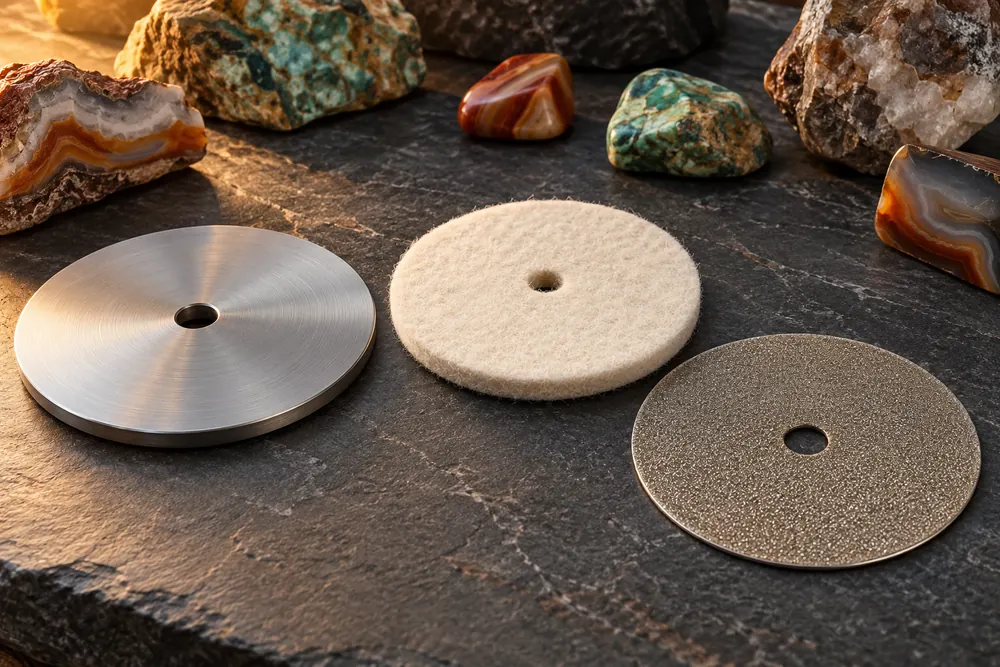
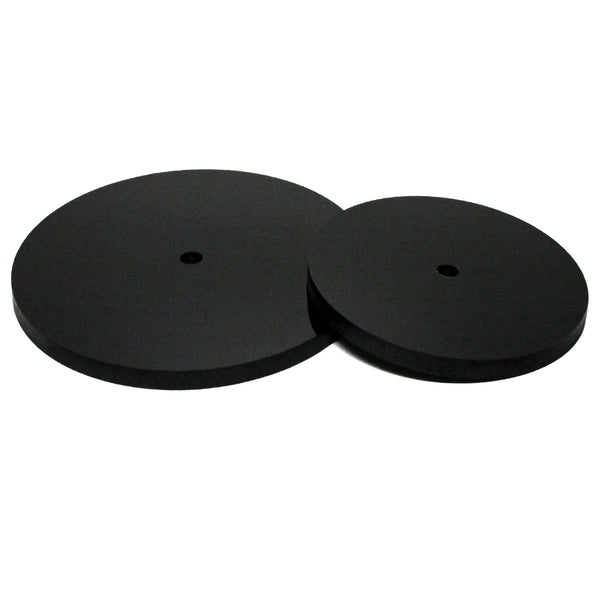
The Hi-Tech Diamond acrylic plates considered here are offered in six- and eight-inch diameters. Their product page specifies three-eighth-inch thickness and a half-inch arbor hole. These are useful identification fields for the manufacturer’s system; they are not a universal flat-lap standard.
Record the exact machine, spindle arrangement and approved accessory before buying another brand’s plate. A center hole that fits does not confirm clearance, balance, attachment or acceptable load. An industrial metal lap can be very different from the lightweight plate originally supplied with a compact machine.
A polishing pad is not a fine grinding disc
The Tech-11 product page describes a wool-felt surface intended to be charged with polishing media. Its listed examples include diamond paste, cerium oxide and tin oxide. The pad and the compound therefore represent separate purchasing decisions. A bare felt pad does not supply a specified diamond grit by itself.
By contrast, a manufactured abrasive disc may already contain its abrasive. Check whether a listing is for an uncharged pad, a charged surface, an adhesive-backed disc or a complete mounted assembly. This avoids ordering a finishing material when the missing component is actually a backing plate.
Choose rigid or cushioned support deliberately
Hi-Tech describes sponge pads as a cushion beneath specified smoothing discs and polishing pads. That changes the support beneath the working surface. A buyer seeking a particular flat or domed form should ask which documented assembly suits the task instead of assuming extra softness always improves a finish.
Do not add an unapproved stack of foam layers to compensate for a mounting problem. Extra thickness changes the assembly. Keep the manufacturer’s intended components and arrangement together, and check whether the mount can accommodate them. If a disc already moves or peels, address that fault before changing compliance.
Keep compounds and abrasive grades identifiable
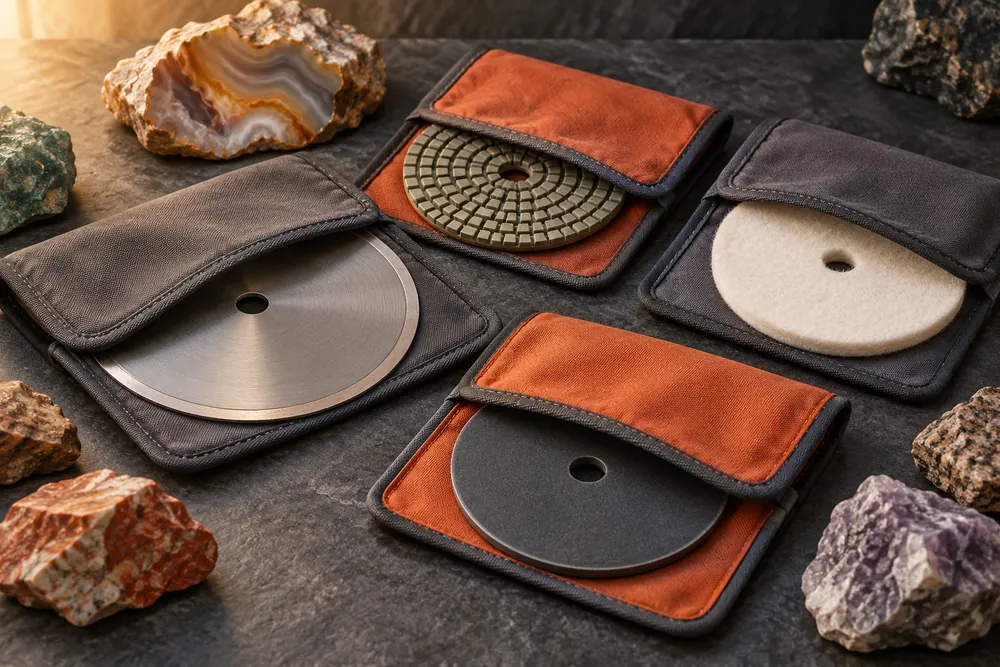
The Tech-11 instructions specify one polishing media or mesh per pad. Label the storage container with the compound, grade and date first used. Store each clean, dry assembly separately so an unlabeled pad does not become a guess during the next session.
A practical inventory might list a dedicated diamond-paste pad and a separate oxide pad, provided both combinations are appropriate for the equipment and material. This is an organizational example, not a universal polishing recipe. Our compound comparison distinguishes supplied form, grade and buying checks.
Amazon button opens a product-name search, not a verified matching offer. Check the item, seller and availability. No tracked affiliate offer is represented. About our shopping links.
Count complete assemblies before ordering spares
Write down which discs are already mounted, which plates are reusable under the current instructions and which new stages genuinely need dedicated support. Buying one plate for every item in a shopping cart can duplicate parts; buying only one may make frequent adhesive removal necessary. Decide based on your actual sequence and storage.
For the All-U-Need, distinguish the machine’s included kit from separate replacement kits. Similar product names do not guarantee identical contents. Our mineral versus glass kit comparison helps identify the stages before you count plates and finishing pads.
Check centering and mounting before use
Follow the machine manual when assembling a disc and plate. The All-U-Need instructions connect miscentering with out-of-round rotation and vibration. Keep the central holes correctly aligned and use the prescribed hardware, rather than forcing a slightly offset disc to behave by tightening harder.
Do not use this article as a solvent, heat-treatment or torque specification. Adhesive removal methods depend on the materials and current instructions. Ask the manufacturer if the plate is distorted, the adhesive has failed or the previous owner used unknown glue. See disc slipping and alignment checks for a fault-report worksheet.
An efficient accessory purchase
Ask the seller to name the machine and the complete proposed stack in its reply: plate, optional cushion, working disc or pad, attachment and approved compound. Confirm whether the item arrives assembled and whether a photograph includes parts sold separately. Then compare the delivered total for the same usable assembly.
Start with the missing component that solves an identified need. A spare approved plate can reduce repeated remounting; an additional dedicated pad can keep compounds separate. Neither is a reason to buy every available polishing accessory before the current sequence is understood. Keep notes so future replacement orders refer to an exact assembly.
Amazon button opens a product-name search, not a verified matching offer. Check the item, seller and availability. No tracked affiliate offer is represented. About our shopping links.
Sources and verification
Sources checked October 22, 2026. Manufacturer specifications and manuals describe the equipment; our selection and planning advice is editorial analysis. We have not physically tested these products. Confirm the exact revision and current instructions before ordering or operating.
A DETAIL CHANGED?
Help keep this guide accurate.
Send the model number and a link to the current specification.